Learn the loop. Defend the decision.
Realistic synthetic examples, clear engineering explanations and controlled practice. Start with the evidence, understand the response, then demonstrate sound reasoning.
Read the loop before touching the tuning
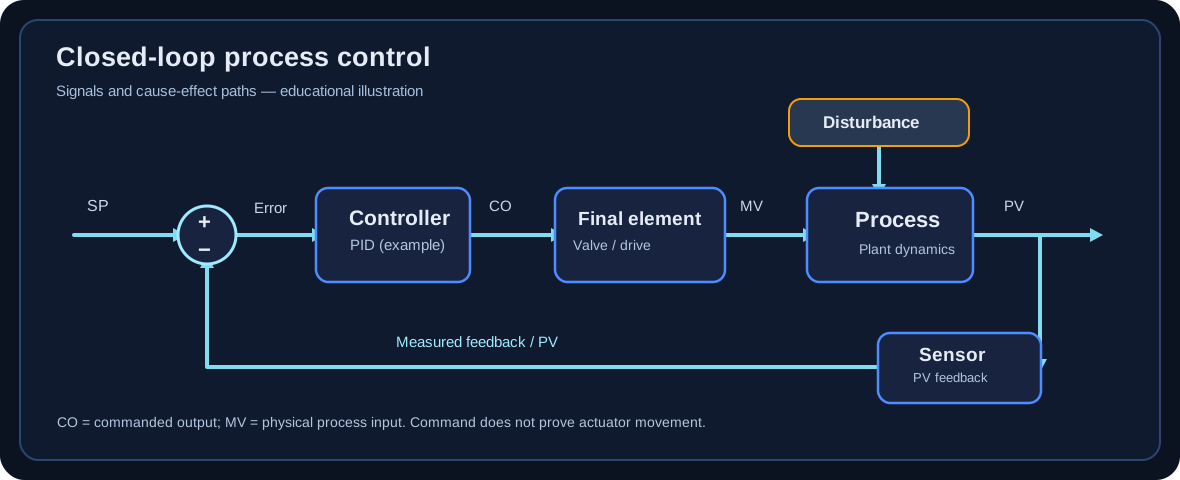
Recognize the process variable (PV), setpoint (SP), controller output (CO), manipulated variable (MV) and final control element. Explain the control objective in ordinary plant language.
Concepts to master
- Identify the sensor, controller, output path, final element and process response on a basic P&ID. CO is often a percentage command; MV is the physical quantity changed, such as valve flow.
- Distinguish a setpoint move from an output step. They are not interchangeable for identifying open-loop process dynamics.
- Check units, engineering ranges, sample interval, operating mode, controller action and whether output limits or permissives are active.
- Ask which process constraints matter: product quality, pressure, level limits, environmental consequences and valve travel.
If controller action, valve fail position or output authority is uncertain, stop. Request the loop sheet, instrument data, operating procedure and authorized review.
Go deeper with practical tools
Training content and diagrams are simulated educational examples. This workspace does not grade competency, issue certifications, write to industrial equipment, or authorize any field changes. The separate Competency Lab enforces account and entitlement requirements.